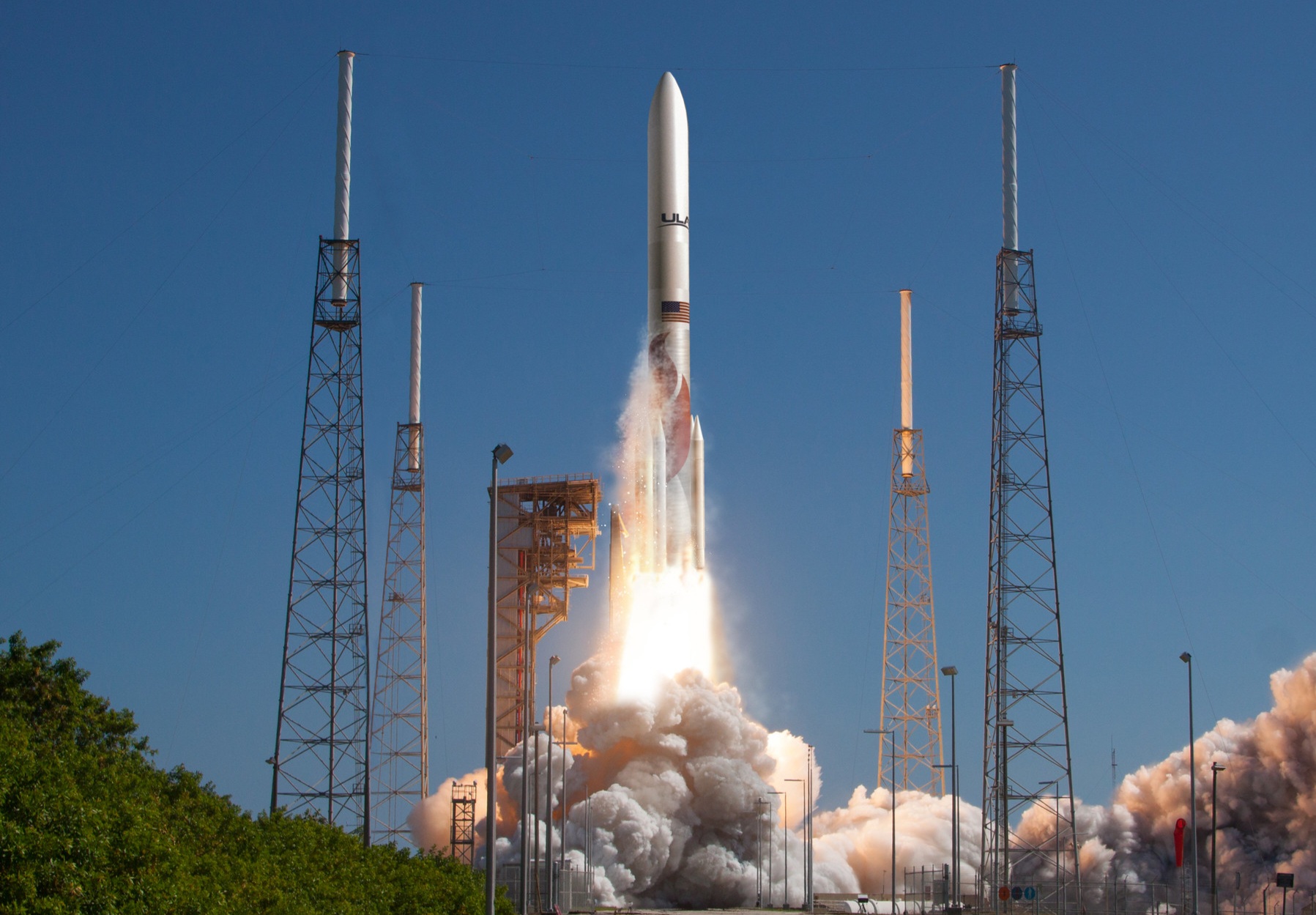
Amazon Leo (LV-01)
Vulcan VC6L · United Launch Alliance · Space Launch Complex 41
Overview
Go for launch
United Launch Alliance says the launch can go ahead on Saturday, 14 November 2026, 17:32 UTC. Even with a go, the time can still move by minutes or hours for weather, technical checks or other traffic at the range.
Your local time:
Next: the countdown, fuelling, a final go or no-go, then liftoff.
- Rocket
- Vulcan VC6L
- Provider
- United Launch Alliance
- Launch pad
- Space Launch Complex 41
- Location
- Cape Canaveral SFS, FL, USA
- Launch time
- Sat 14 Nov 2026, 17:32 UTC
- Launch window
- Sat 14 Nov 2026, 17:32 UTC to Sat 14 Nov 2026, 18:01 UTC
- Mission type
- Communications
- Orbit
- Low Earth Orbit
Live updates
Newest first, times in UTC- Our coverage · Rockets and launches Vulcan returns to flight with 40 Amazon Leo satellites
ULA's Vulcan Centaur flies for the first time in nine months on Nov. 14, after two solid booster nozzle failures paused Space Force missions.
Discussion 0
Open as a postAsk a question, share what you see or explain what a number means. Link a source for any figure.
- No comments yet. Be the first to say something useful.
Mission
Amazon Leo, formerly known as Project Kuiper, is a mega constellation of satellites in Low Earth Orbit that will offer broadband internet access, this constellation will be managed by Kuiper Systems LLC, a subsidiary of Amazon. This constellation is planned to be composed of 3,276 satellites. The satellites are projected to be placed in 98 orbital planes in three orbital layers, one at 590 km, 610 km and 630 km altitude. 45 satellites will be carried on each Vulcan launch.
Description from the launch provider, passed on by Launch Library, The Space Devs.
Rocket
Vulcan Centaur is a two-stage-to-orbit, heavy-lift launch vehicle under development by United Launch Alliance (ULA) since 2014. It is principally designed to meet launch demands for the U.S. government's National Security Space Launch (NSSL) program for use by the United States Space Force and U.S. intelligence agencies for national security satellite launches. It will replace both of ULA's existing launchers (Atlas V and Delta IV Heavy) in this role, as these launchers are retiring.