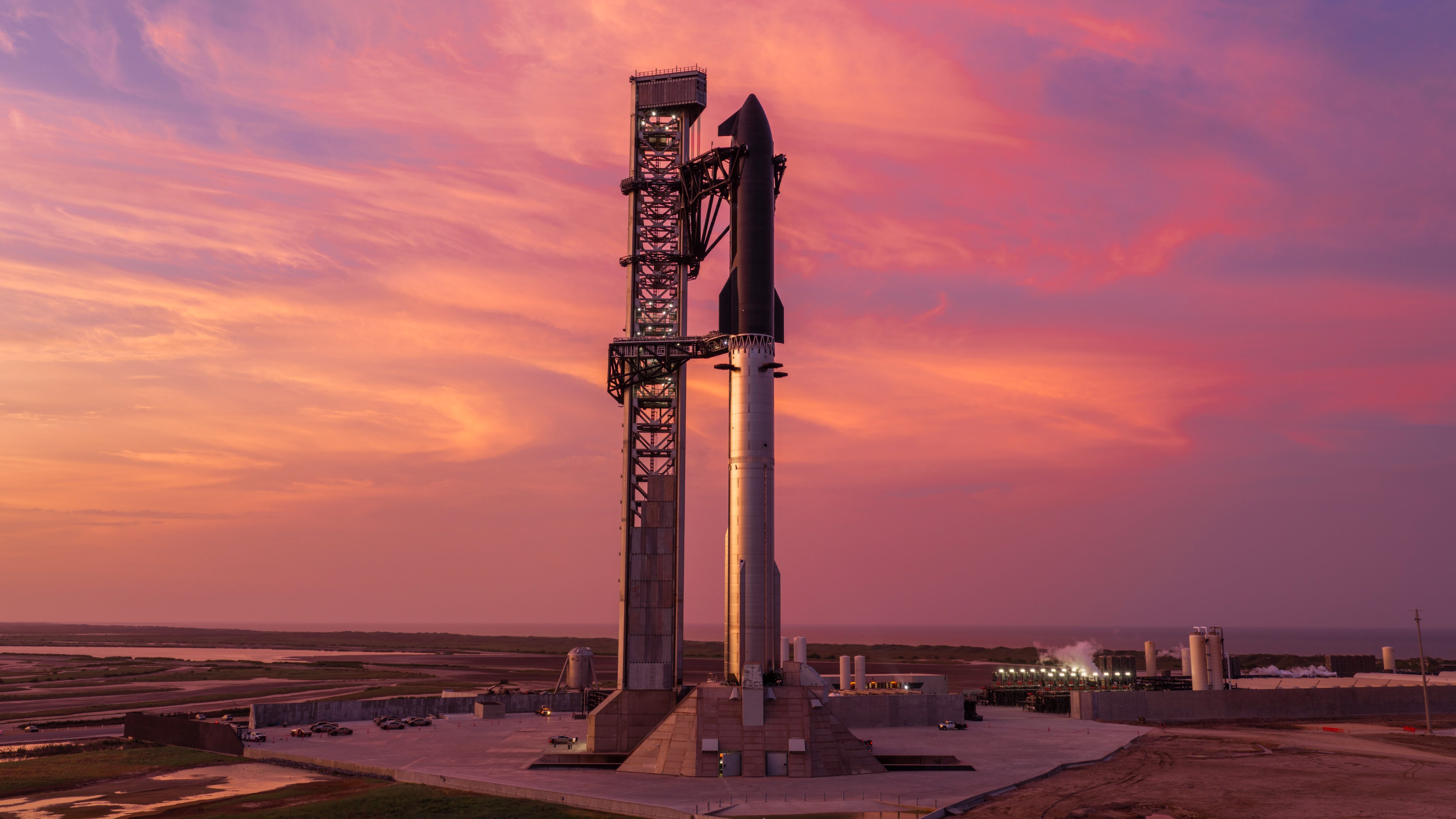
Starlink Group 31-2 (Starship Flight 15)
Starship V3 · SpaceX · Orbital Launch Pad 2
Overview
Payload deployed
Starship V3 lifted off on Fri 13 Nov 2026, 22:47 UTC and released its payload in orbit. The launch itself is over; what happens next (landings, recovery, results) is covered in the live updates and our posts.
Next: the provider confirms the final result, and this label changes to a success or a failure.
- Rocket
- Starship V3
- Provider
- SpaceX
- Launch pad
- Orbital Launch Pad 2
- Location
- SpaceX Starbase, TX, USA
- Launch time
- Fri 13 Nov 2026, 22:47 UTC
- Launch window
- Fri 13 Nov 2026, 22:45 UTC to Sat 14 Nov 2026, 00:00 UTC
- Mission type
- Communications
- Orbit
- Low Earth Orbit
Live updates
Newest first, times in UTC- Our coverage · Rockets and launches Starship Flight 15 reaches orbit, no booster catch
Starship reached orbit and deployed 26 Starlink V3 satellites, but the booster was diverted to the Gulf. The ship's own tower catch is planned for…
- Our coverage · Rockets and launches Two flown Starship tiles set to fly again: a tiny sample for a 20,000-tile question
What NASASpaceflight reports: Ship 41 was rolled to Pad 2 carrying two heat-shield tiles recovered from Ship 40 after Flight 13, fitted at the aft…
Discussion 0
Open as a postAsk a question, share what you see or explain what a number means. Link a source for any figure.
- No comments yet. Be the first to say something useful.
Mission
15th test flight of the two-stage Starship launch vehicle and 4th flight of Starship V3. Second Starship flight to deploy satellites (a group of Starlink satellites known as Starlink Group 31-2) into stable Low Earth Orbit and first ever to attempt returning the Starship 2nd stage back to the launch site. The ship is expected to fly at an altitude approximately 275 km above Earth and complete approximately 14 orbits around the planet for more than 22 hours, with the ship expected to attempt returning back to Starbase, Texas on its launch pad by pad arms catching. The booster’s primary test objective on Flight 15 will be executing a successful launch, ascent, stage separation, boostback burn, and landing by pad arms catching. This will also be the 1st Starship V3 booster to attempt returning to its launch site. Starship will deliver 26 Starlink V3 satellites to orbit for the second time, which aim to greatly expand the network's capacity and user speeds. Each Starlink V3 satellite will add 1 Tbps of capacity to the constellation. 3 of the satellites have been modified with a suite of cameras to scan Starship’s heatshield and transmit imagery down to operators.
Description from the launch provider, passed on by Launch Library, The Space Devs.
Rocket
Third development version of the Starship reusable two-stage super heavy-lift launch vehicle.
Launch site
The second launch and landing pad of the full version of the combined SpaceX Starship and Superheavy booster. To be first used for launch in 2025 with version 3 of Starship and the Superheavy booster. The launch mount itself is named Orbital Launch Mount B.
Orbital Launch Pad 2 · SpaceX Starbase, TX, USA